 YiGeng
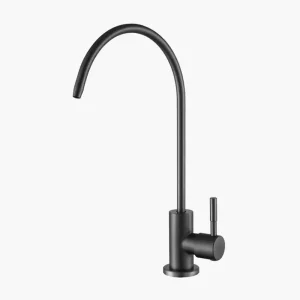
B2B Industry Whitepaper: Matte Black Faucets
Analyzing material science, structural engineering, manufacturing cost-dynamics, and global supply networks.
In the contemporary B2B architectural and plumbing supply landscape, the demand for matte black bathroom faucets has shifted from a niche architectural trend to a core inventory item. The aesthetic appeal of matte black fixtures lies in their ability to provide an understated elegance, high contrast, and a modern edge to diverse designs. However, for distributors, developers, and hospitality procurement teams, sourcing a cost-effective yet highly durable matte black faucet involves navigating complex manufacturing standards, material grades, surface treatments, and international compliance regulations.
1. Material Science and Structural Engineering in Faucet Production
The lifetime durability of a bathroom faucet depends fundamentally on its core substrate. While cheap consumer-grade faucets utilize plastic (ABS) or zinc alloys, premium commercial products rely on heavy, solid brass or grade SUS304/SUS316 stainless steel. Standard commercial brass formulations require strict regulation of lead content to satisfy drinking water safety guidelines such as NSF/ANSI 61 and 372. Our factories utilize high-density, low-lead (or lead-free) HPb59-1 brass, which undergoes precision gravity casting or hot forging to eliminate structural porosity that might lead to stress cracking under high pressure.
Furthermore, internal components dictate operational lifespan. Ceramic disc cartridges—tested up to 500,000 cycles—form the heart of our flow control systems. These cartridges utilize diamond-polished ceramic discs that create a perfect, watertight seal, resisting the wear and tear associated with hard water minerals and thermal stress.
2. Surface Finishing Technologies: PVD vs. Electroplating vs. Powder Coating
For black faucets, the quality of the finish is the primary indicator of longevity. Unlike chrome finishes, black coatings are historically susceptible to scratching, chemical degradation, and peeling if improperly applied. Understanding the science behind these processes is critical for B2B buyers seeking to minimize returns and warranties:
- Powder Coating (Epoxy/Polyurethane Paint): This process involves spraying a dry powder coating onto the electrostatically charged metal body, then baking it at high temperatures. While highly cost-effective, powder coatings are thick and can chip or scratch over time if subjected to harsh cleaners or impact.
- Electro-deposition (EDC / Electroplating): By submerging the faucet in an organic lacquer bath and applying an electric current, a uniform thin layer is deposited. This method offers excellent coverage for complex geometries, yielding a deep, saturated matte black texture with superior chemical resistance.
- Physical Vapor Deposition (PVD): The gold standard in surface treatment. In a vacuum chamber, the black finish material is vaporized into a plasma state and bonded to the molecular level of the faucet substrate. A PVD matte black finish is virtually scratch-resistant, highly resistant to fingerprints and water spots, and guarantees a lifetime of chemical stability.
3. Structural Integration & China's Supply-Chain Hub Advantages
China's kitchen and bathroom manufacturing clusters, particularly in the Henan, Guangdong, and Zhejiang provinces, provide B2B buyers with unparalleled vertical integration. Sourcing directly from an established Chinese factory reduces the cost overhead by up to 45% compared to Western assemblers. This advantage is driven by:
- All-In-One Industrial Ecosystems: From raw brass smelting and mold development to electroplating, assembly, testing, and packaging—every step is completed within a tight industrial perimeter. This reduces internal transport costs and optimizes quality control.
- Scale & Automation: Automated casting lines, CNC machining, and robotic polishing lines increase precision while lowering unit labor costs.
- Rapid Tooling & Customization: Advanced 3D modeling and rapid tooling allow factories to go from ID design concepts to physically approved samples in less than 30 days.