Direct from factory production lines, engineered for compliance and high aesthetic adaptability across global markets.
The global kitchen and bathroom fixtures market has undergone a significant paradigm shift over the past decade. Traditionally dominated by electroplated brass, modern commercial and residential construction project specifications now lean heavily toward SUS304 and SUS316 stainless steel. This transition is not merely driven by aesthetics, but by stringent environmental guidelines, long-term durability metrics, and overall life-cycle cost considerations.
From a metallurgical standpoint, stainless steel offers inherent protection against heavy metal contamination. Traditional brass components, even when designated "lead-free," often contain trace amounts of lead added to improve machineability. In contrast, premium food-grade SUS304 and medical-grade SUS316 are completely lead-free by nature. Because public health standards like the Safe Drinking Water Act (SDWA) in the USA and European Drinking Water Directives continue to lower the threshold of acceptable lead leaching, stainless steel represents a future-proof choice for commercial developers, school districts, and luxury residential projects alike.
The alloy composition of SUS304 (typically containing 18% Chromium and 8% Nickel) creates a self-healing chromium oxide passivation layer. This passive layer is highly resistant to pitting and localized crevice corrosion commonly caused by tap water treated with chlorine and chloramines. This durability results in a product lifetime that is 3 to 5 times longer than typical copper-based alloys under heavy daily usage.
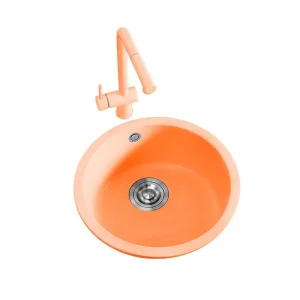
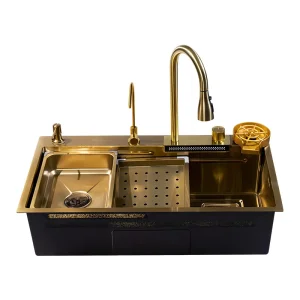
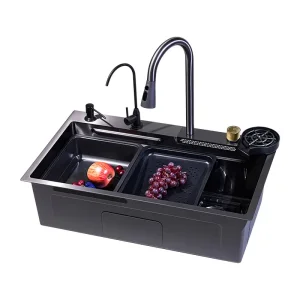
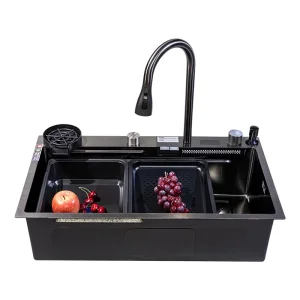
Furthermore, design integration has become a major differentiator. The modern kitchen is no longer a utilitarian space; it is a high-functioning design center. The rise of colored kitchen elements has led to the adoption of Physical Vapor Deposition (PVD) finishes, which allow for the creation of unique matte black, champagne gold, and customized "Macaron" colors without compromising the eco-friendly profile of the base stainless steel.
B2B buyers, volume distributors, and project procurement managers have highly specific requirements that go far beyond the surface unit price. They operate under a Total Cost of Ownership (TCO) model, evaluating a complex matrix of regulatory compliance, manufacturing consistency, supply chain reliability, and logistical overhead.
Enterprise buyers evaluate suppliers based on their production capacity and technical stability. The ability to handle high-volume demands is a key differentiator in supplier selection. As a leading brand in the kitchen appliances sector, our integrated manufacturing footprint—spanning a 50,000 square meter plant area, powered by more than 700 production workers, and guided by 25 dedicated R&D personnel and 10 design department staff—provides the operational depth required to reliably execute complex, multi-phase global contracts.
Furthermore, international commercial standards are non-negotiable. Faucets and sinks must meet local regulations, such as CUPC for North America, CE for the European Economic Area, and WRAS for the United Kingdom. B2B buyers search for factories capable of providing certified OEM/ODM services to ensure compliance and avoid customs delays.
Modern manufacturing in China has evolved beyond simple cost advantages to focus on high-efficiency, technology-driven production. The implementation of Factory 4.0 paradigms allows leading companies to combine automated precision with cost-effective operations. At Henan Yigen Kitchen & Bathroom Co., Ltd., this approach integrates robotic welding systems, automated polishing stations, and advanced ERP logistics management.
This high-tech infrastructure ensures precise manufacturing tolerances down to ±0.02mm, which is critical for maintaining consistent seal integrity and leak prevention across thousands of units. Robotic lasers weld stainless steel seams with minimal thermal distortion, preserving the microstructural properties of the steel. This automated precision ensures high durability while maintaining competitive production costs.

Furthermore, supply chain resilience is rooted in deep local integration. By sourcing high-grade cold-rolled stainless steel coils, precision ceramic cartridges, and high-durability braided hoses from localized industrial clusters, factories can mitigate the risks of international supply chain disruptions. This ecosystem allows manufacturers to quickly adapt to shifting market conditions and keep production moving on schedule.
We provide a structured, transparent, and rigorous product development lifecycle designed to bring high-performance ideas from concepts to final production runs.


Our engineering team supports you at every step of this workflow. During the ID Design and 3D Modeling phases, we analyze fluid dynamics to optimize water conservation and prevent turbulence-induced noise. During the Sample Testing phase, each custom faucet prototype undergoes rigorous stress testing, including 500,000-cycle life testing of the ceramic cartridge and high-pressure hydrostatic checks, to ensure long-term durability before launching Mass Production.
Discover our specialized product categories, built with high-grade materials and designed to integrate seamlessly into modern residential and commercial environments.
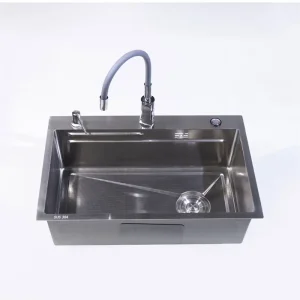
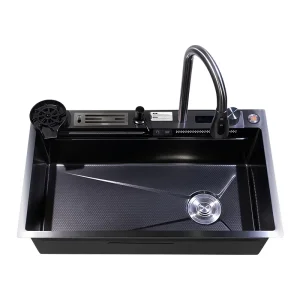
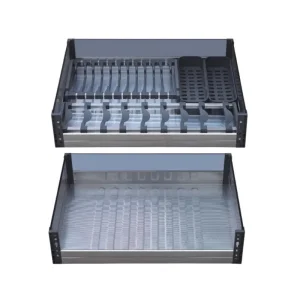
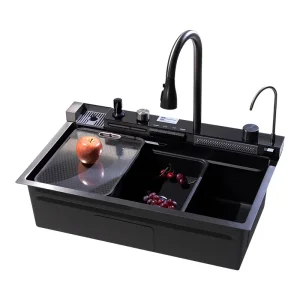
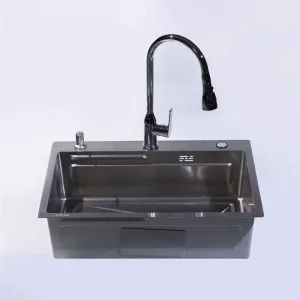
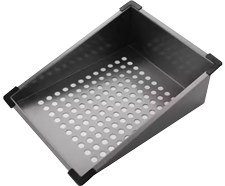
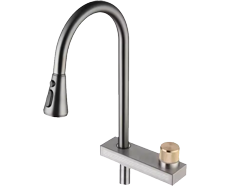
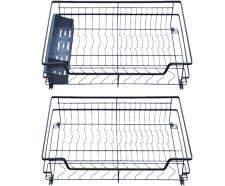
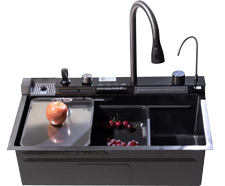
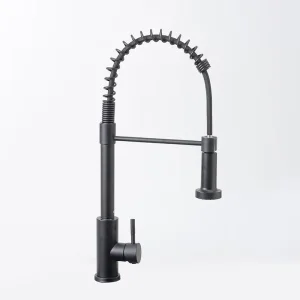
Our products are designed for the demands of high-traffic kitchen and bathroom environments. From high-capacity stainless steel sinks featuring sound-dampening undercoating and anti-condensation spray, to pulldown spring faucets and pull-out storage baskets, we provide integrated solutions that optimize kitchen workspaces.
By coordinating the materials and finishes of our sinks, faucets, and drain baskets, we help clients achieve a unified aesthetic across their product lines. This consistency reduces design alignment challenges and simplifies sourcing for projects at any scale.
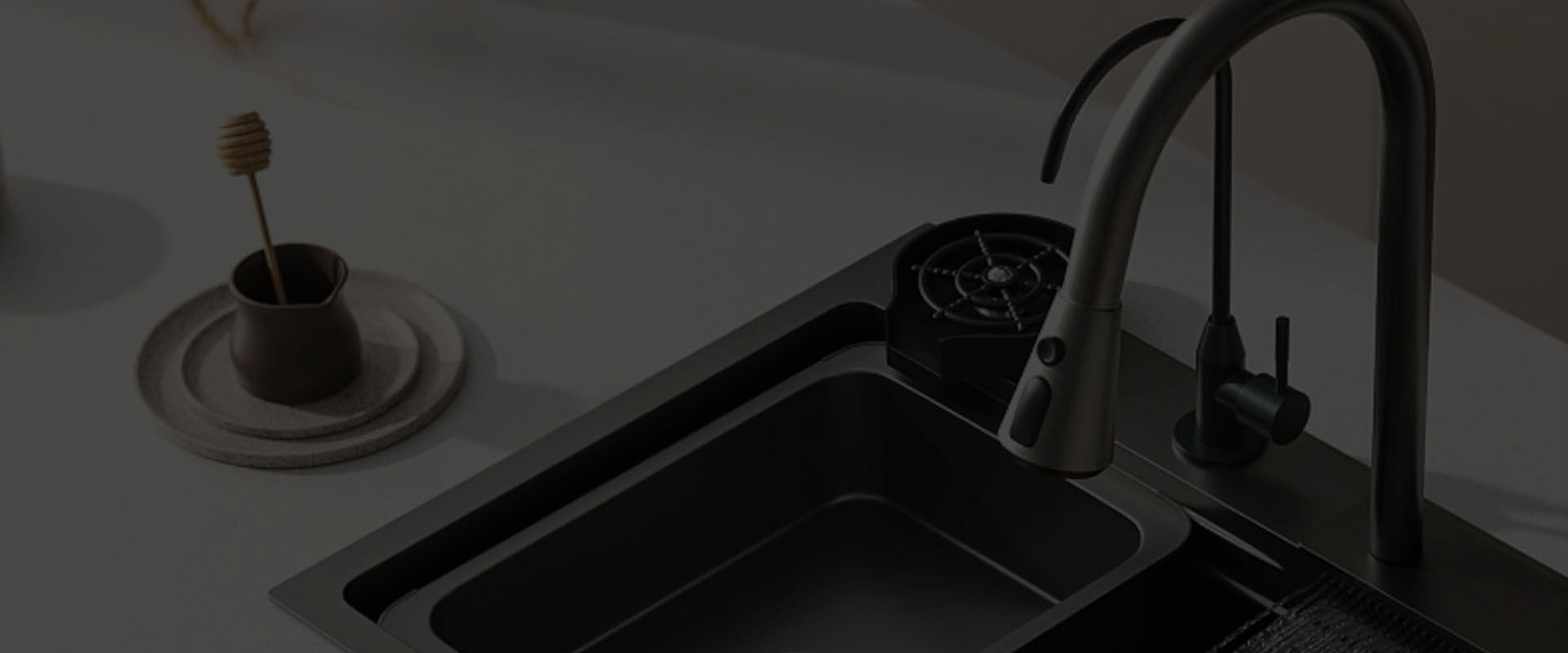
In the global commercial and residential sectors, stainless steel fixtures are chosen for their versatility across a range of specialized applications:
High-intensity commercial kitchens require faucets that can withstand constant use, chemical exposure, and temperature fluctuations. Our high-pressure pull-out spring kitchen faucets are engineered with reinforced ceramic cartridges to handle rigorous commercial shifts without pressure drops or leaking.
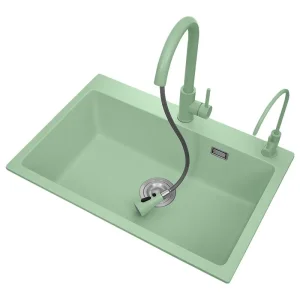
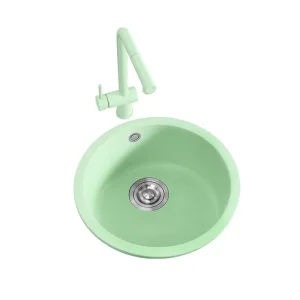
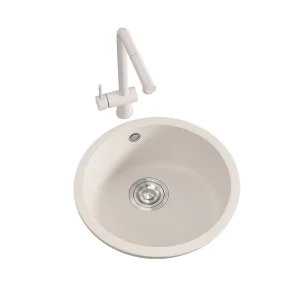
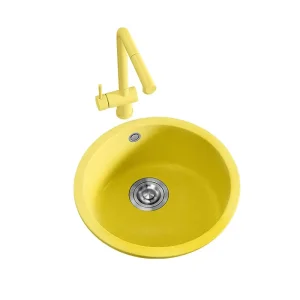
Safety is a primary design driver in municipal projects, school environments, and childcare facilities. We offer targeted solutions, including custom-designed kindergarten sinks (such as our Bee Yellow and Cream White models) coupled with heavy-metal-free, lead-free SUS304 faucets to support healthy, safe spaces.
Real estate developers seek cost-efficiency without compromising the durability of tenant fixtures. High-quality stainless steel sink and faucet pairings offer an attractive balance of modern style, low maintenance requirements, and longevity, helping properties keep operating costs down over the long term.
Stay updated with structural developments, technological breakthroughs, and material supply chain reports from our research teams.
Exploring the integration of smart touchless sensors, acoustic damping technologies, and low-pressure PVD finishes in modern kitchen workstation design.
An analysis of workflow efficiency and ergonomics, focusing on the configuration of sinks, faucets, and built-in drainage systems in high-use residential kitchens.
A global market report detailing B2B demand patterns across Europe, North America, and Southeast Asia, with a focus on material lifecycle sustainability.
Find answers to key technical questions from procurement agents, engineering consultants, and quality control professionals.
SUS304 contains a minimum of 18% Chromium and 8% Nickel. This specific alloy composition forms a resilient chromium oxide surface layer that prevents rusting and structural decay, even when exposed to fluctuating water chemistry and minerals over long periods.
During the 3D Modeling and Sample Testing phases, our R&D team aligns design parameters with target market standards (such as ASME A112.18.1/CSA B125.1 in North America or EN 817 in Europe). We then coordinate with certified testing laboratories to complete the necessary compliance approvals before mass production begins.
We use a multi-stage Quality Assurance protocol that includes spectral analysis of incoming raw material steel batches, 100% pneumatic leak testing for all assembled valve housings, and hydrostatic pressure testing for complete faucet assemblies before final packaging.
We offer a range of finishes, including brushed stainless steel, matte black, oil-rubbed bronze, and advanced PVD color applications (such as gold, graphite grey, and custom pastel tones). These options help designers and project managers achieve their specific aesthetic goals.
Expand your sourcing catalog with additional high-performance solutions, featuring durable PVD colors and classic industrial designs.
 YiGeng