Explore our core selection of heavy-duty, corrosion-resistant, and aesthetically optimized industrial and kitchen products engineered for long-term endurance.
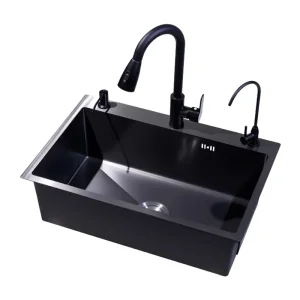
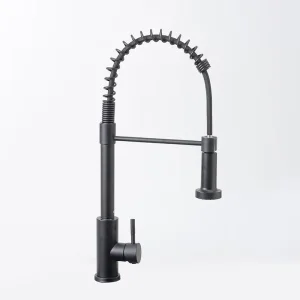
A statistical outline of Henan Yigen Kitchen & Bathroom Co., Ltd.'s processing and spatial resources optimized for massive high-volume OEM/ODM commercial projects.
In the contemporary B2B landscape, procurement teams, real estate developers, and infrastructure planners face a persistent challenge: balancing raw material integrity with capital efficiency. The phrase "cheap stainless steel" has historically been associated with reduced service life or compromised structural integrity. However, when analyzed through the lens of modern industrial economics, cost-effective stainless steel is no longer a compromise—it is the direct outcome of manufacturing clustering, raw material vertical integration, and advanced structural automation.
Information Gain Metric: True cost efficiency in stainless steel metallurgy does not result from downgrading alloying elements (such as reducing Nickel or Chromium percentages), but rather from structural optimization of manufacturing cycles, waste-heat recapture, and strategic geographic proximity to primary smelting facilities.
The global steel industry has entered a phase of intensive digitization and environmental alignment. As governments impose stringent decarbonization policies and life-cycle carbon tracking, stainless steel has emerged as the definitive sustainable alloy for clean water infrastructure and premium sanitation installations. Unlike standard carbon steels or composite resins, high-grade alloys such as SUS304 and SUS316 boast a recycling recapture rate exceeding 85% globally.
Furthermore, the geographic consolidation of raw processing facilities allows companies like Henan Yigen Kitchen & Bathroom Co., Ltd. to capture significant shipping and raw ingot pricing advantages. By bypassing secondary metal merchants and establishing direct channels to state-level smelting clusters, the factory minimizes systemic supply-chain premiums, transferring these direct savings to high-volume buyers. This dynamic underpins the strategic balance of competitive pricing and strict conformity to ASME and European EN standards.
Within our advanced 50,000 square meter facility, manufacturing runs along two distinct mechanical pathways, each answering to distinct commercial needs:
A. Precision Cold-Drawing and Hydroforming: This pathway uses massive hydraulic presses to shape raw steel sheets into seamless, monolithic structures under pressures exceeding 1,200 metric tons. This process is ideal for high-volume standard product runs, ensuring maximum dimensional uniformity, flawless grain alignment, and high structural density. The speed of hydroforming drastically lowers unit costs, making it the bedrock of competitive public-sector bidding and mid-scale housing projects.
B. Custom TIG Welding & Handmade Artistry: Reserved for complex architectural specifications and boutique designs, our handmade workshop utilizes experienced welders who perform Tungsten Inert Gas (TIG) welding on 1.2mm to 1.5mm gauge steel sheets. This method allows for sharp, precise corner profiles (ranging from tight R15 radiuses to clean R0 zero-radius angles) that cannot be achieved via standard stamping. These hand-finished units provide superior depth and volume, optimizing work surfaces for luxury developments and custom labs.
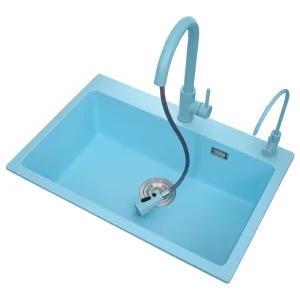
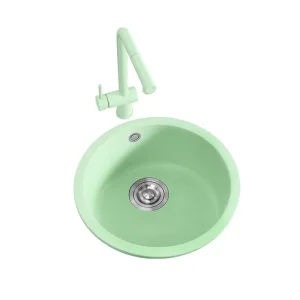
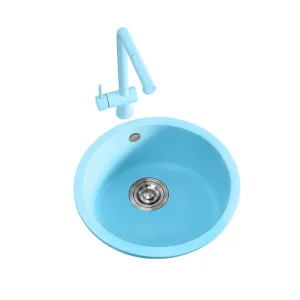
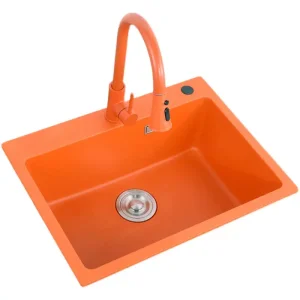
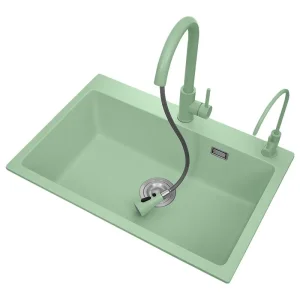
Technical Focus: Our proprietary PVD (Physical Vapor Deposition) nano-coating process introduces titanium molecules to the metal surface inside a high-vacuum chamber, creating a microscopic, wear-resistant color barrier. This technique results in distinctive finishes—such as Macaron palettes, Forest Green, and Hermes Orange—without reducing the underlying metal's corrosion resistance.
Industrial components must adapt to the unique regulatory and climate requirements of their target markets. Our global export configurations are engineered for seamless international compliance:
The next decade of sanitary design will merge mechanical reliability with structural intelligence. Our R&D division is focused on three primary vectors:
I. Intelligent Water Management: Integrating non-contact sensors and hydrodynamic micro-turbines directly into the faucet assembly, eliminating external electrical requirements and reducing commercial water usage by up to 40%.
II. Eco-Friendly Metallurgy: Transitioning production lines to zero-discharge processes. Every liter of water used in acid pickling and surface passivation is recycled within a closed-loop filtration system, meeting international environmental standards.
III. Specialized Anti-Condensation Formulations: Utilizing non-toxic, water-based undercoatings sprayed at high pressures to prevent condensation build-up in high-humidity climates, preserving structural woodwork and surrounding cabinetry.
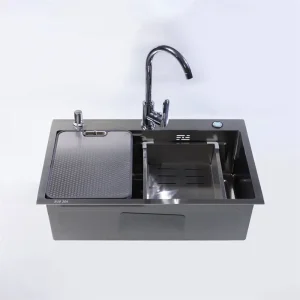
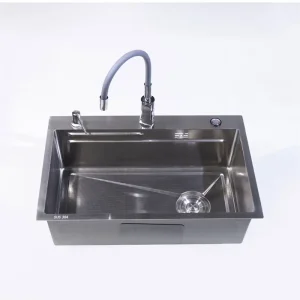
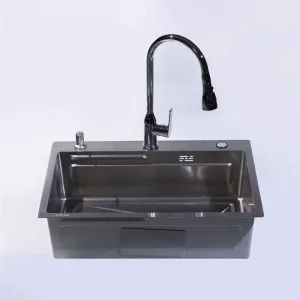
Our comprehensive custom capabilities span multiple categories, offering tailored designs for complex residential and commercial projects.
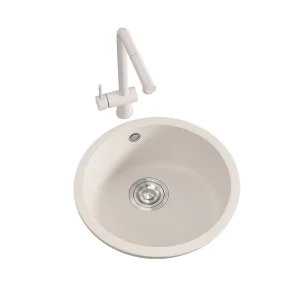
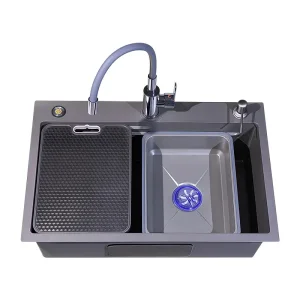
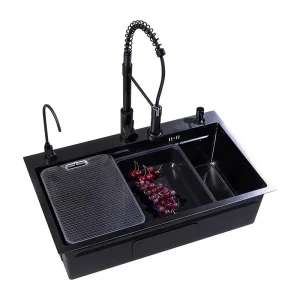
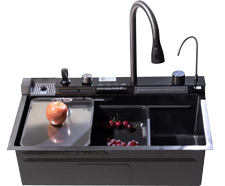 Sinks
Sinks
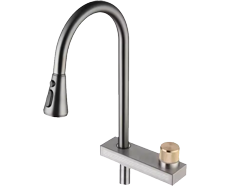 Faucets
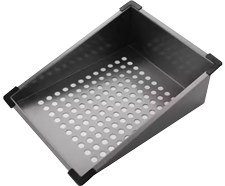 Drain Baskets
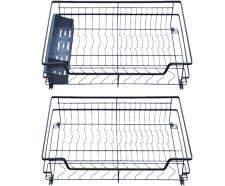 Pull Baskets
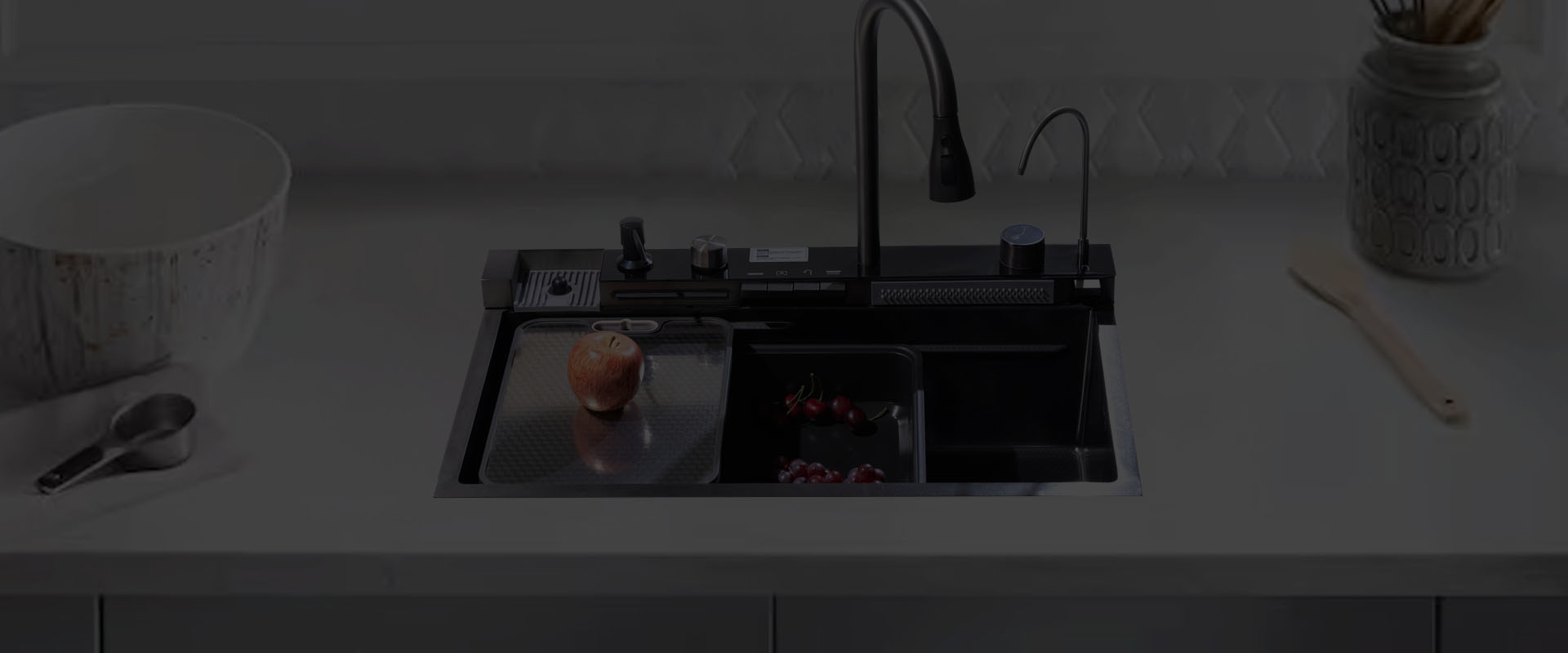
Our core manufacturing lines are optimized for high-volume custom B2B sink production. Engineered from premium 18-gauge SUS304 steel sheets, they feature sound-deadening rubber pads and structural anti-condensation layers to guarantee durability under demanding, continuous commercial use.
A rigorous, structured pathway from initial design concept to global logistical delivery, ensuring high dimensional consistency and quality control at every stage.

1. Provide ID Design

2. 3D Modeling

3. Tooling & Prototyping

4. Sample Confirmation

5. Sample Refinement

6. Rigorous Testing

7. Mass Production
Stay updated on key developments in global sanitation engineering, alloy pricing trends, and green building standards.
An investigation into smart design trends, non-contact automation, and nano-coatings within modern multi-family housing projects.
How open-plan living spaces have shifted the role of the kitchen sink from a simple utility to a design centerpiece.
An analysis of key B2B growth drivers, including rising urbanization, green certifications, and increasing demand for customizable colored steel.
Providing direct answers to technical queries from engineering teams, purchasing managers, and supply-chain partners.
SUS304 contains roughly 18% chromium and 8% nickel, providing strong general-purpose corrosion resistance suitable for home and light commercial use. SUS316 includes an additional 2% to 3% molybdenum, significantly improving resistance to chloride-induced pitting and crevice corrosion. This makes SUS316 ideal for coastal projects and industrial environments.
Traditional paint coatings sit on top of the metal and are susceptible to chipping and scratching. PVD nano-coatings deposit titanium atoms in a high-vacuum chamber, bonding directly with the steel's surface. This results in a durable finish that resists scratching, heat, and corrosion while offering vibrant aesthetic options.
R0 (zero-radius) corners feature sharp, 90-degree lines that provide a clean, modern geometric look and slightly more basin volume, though they require more careful cleaning. R10 and R15 corners offer a subtle, rounded curve that makes maintenance easier while retaining a sleek, modern profile.
We apply a dense, non-toxic anti-condensation undercoating that regulates surface temperature. This layer prevents warm air from condensing on the cold outer steel shell, protecting surrounding cabinetry from moisture damage and wood rot.
Our products meet key international standards, including ASME A112.19.3/CSA B45.4 for North America (cUPC compliance), CE standards for European plumbing fixtures, and ISO 9001:2015 for manufacturing quality management.
We utilize a structured, 7-step process: our design team drafts 3D CAD/CAM models, creates prototype molds, runs durability tests, and refines designs based on client feedback before commencing mass automated production.
By sourcing raw steel coils directly from nearby metallurgy hubs, we eliminate multi-tier distributor markups and reduce domestic transit costs, passing these direct savings to B2B buyers.
Every batch undergoes dimensional inspection, salt spray testing for corrosion resistance, hydrostatic testing to ensure weld integrity, and drop testing to verify packaging durability for long-distance transport.
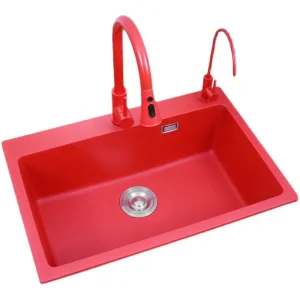
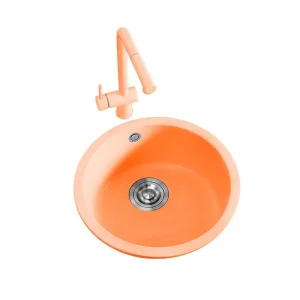
Explore our targeted product range, featuring colorful finishes, pull-out faucets, and compact designs built to the same strict industrial standards.

 YiGeng