 YiGeng

Architectural Whitepaper: Global Sourcing Paradigms for Stainless Steel Glass Components
In contemporary architecture and interior engineering, the integration of structural glass with austenitic stainless steel frameworks has emerged as the global benchmark for commercial and luxury residential builds. From structural glass balustrades to heavy-duty sliding partitions and modern industrial kitchen systems, the selection of component suppliers dictates project durability, compliance, and budget optimization. This document explores the supply chain dynamics, engineering constraints, and manufacturing standards of leading factories producing cost-effective, high-quality stainless steel glass solutions.
1. Global B2B Sourcing Demands & Macro Industry Solutions
Architectural procurement agents and general contractors face a challenging operational environment. High raw material prices, fluctuating shipping costs, and rigorous structural safety standards demand a reliable supply partner. Modern manufacturing solves these problems through specialized specialization. By establishing dedicated assembly lines that merge high-speed stamping, laser cutting, and robotic welding with structural glass integration, modern plants offer cost-effective bulk pricing without compromising dimensional tolerance.
Global purchasing trends reveal a shift towards direct-from-factory sourcing models. Eliminating secondary distributors allows procurement teams to implement Just-in-Time (JIT) delivery logistics, configure bespoke OEM/ODM design variations at the point of manufacture, and obtain direct material trace certifications (such as Mill Test Certificates to EN 10204 3.1).
Materials Science & Testing
We perform systematic chemical composition checks via optical emission spectroscopy to verify chromium, nickel, and molybdenum weight ratios.
High-Precision Machining
Utilizing high-performance CNC machining and robotic polishing systems ensures precision tolerances within +/- 0.05mm across all structural configurations.
Quality Verification
Our quality control program covers surface roughness profiling, salt spray testing, and structural load analysis for peace of mind.
2. Engineering Specifications: Metal Alloy Integrity & Tempered Glass Integration
The mechanical properties of stainless steel structural components are fundamental to the safety of glass systems. High-capacity structural systems utilize two key austenitic alloys:
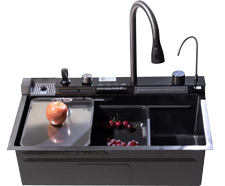
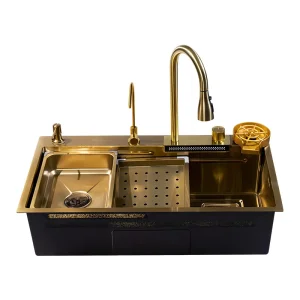
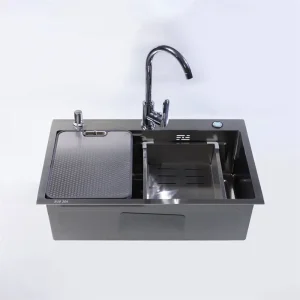
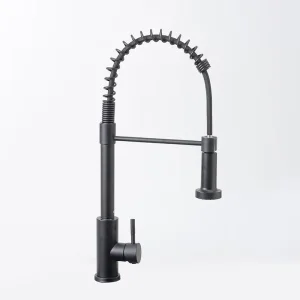
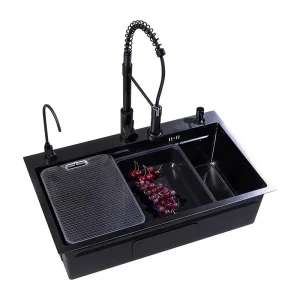
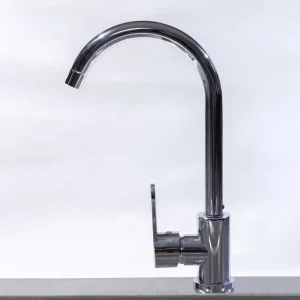
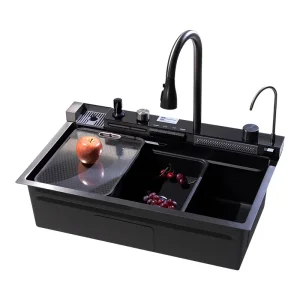
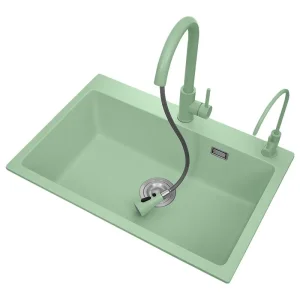
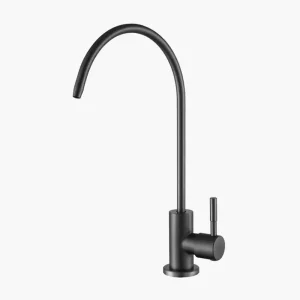
- AISI 304 (EN 1.4301): Contains 18% chromium and 8% nickel. It offers excellent corrosion resistance in typical indoor and standard outdoor environments. This alloy is standard for high-performance residential kitchen sinks, premium commercial faucets, and indoor balustrades.
- AISI 316 (EN 1.4401): Enhanced with 2-3% molybdenum. This addition improves resistance to chloride pitting, making it ideal for marine applications, coastal outdoor balusters, and demanding industrial cleanrooms.
Simultaneously, the glass elements integrated into these frameworks must undergo thermal tempering or lamination. Tempered glass (conforming to EN 12150-1 and ASTM C1048) increases flexural strength up to five times compared to standard annealed glass. When breakage occurs, it fractures into small, blunt fragments, minimizing injury risks. For public commercial installations, laminated safety glass—consisting of two layers of tempered glass bonded by a polyvinyl butyral (PVB) or ionoplast interlayer—is specified to ensure the pane remains structurally intact even if fractured.
3. Advanced Manufacturing Processes & OEM/ODM Customization
Our manufacturing ecosystem combines metal fabrication and precision assembly within our 50,000 square meter facility. High-throughput production lines utilize robotic laser welding systems to produce clean joints free of heat-induced discoloration or micro-cracking.
Our OEM and ODM capabilities support custom fabrication requests. By using advanced 3D CAD modeling and computer-aided engineering (CAE) workflows, our 25-member R&D division can translate customer concepts into physical prototypes within short cycle times. This design flexibility helps project owners match their interior fittings, glass mounts, and finish profiles to specific architectural themes.