Explore our elite array of heavy-duty, corrosion-resistant workstation sinks and custom integrated kitchen racks
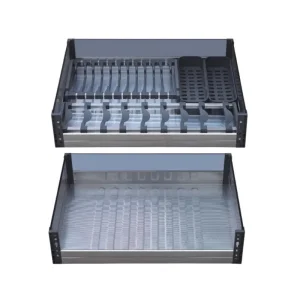
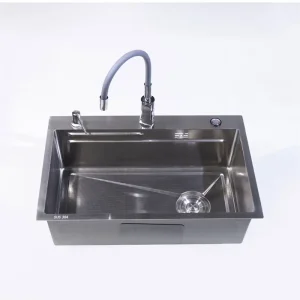
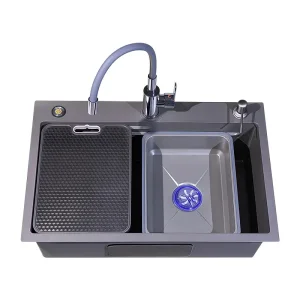
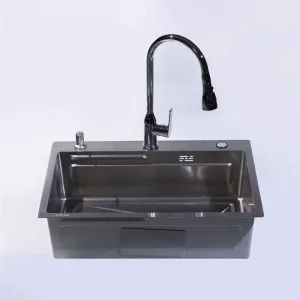
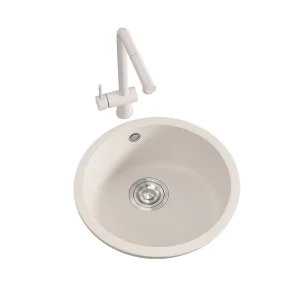
The contemporary kitchen landscape is undergoing a dramatic structural transformation. As urbanization intensifies and culinary architectures trend toward integrated, modular designs, the traditional kitchen sink is no longer just a cleaning basin. Instead, it has transitioned into an active preparation center. At the heart of this operational evolution is the high-quality dish rack for the sink, a meticulously engineered component that demands strict structural calculations, advanced metallurgy, and premium finishing techniques to survive the aggressive wear, moisture, and chemical exposure characteristic of modern domestic and commercial wet-work areas.
B2B Insight Note: Global procurement statistics show a 42% increase in project specifications requiring pre-integrated sink storage systems, proving that developers and consumers view the space over and inside the sink as prime culinary real estate.
For decades, dish racks were regarded as secondary, freestanding accessories designed for countertop placement. This configuration, however, presents persistent challenges: pooling water, countertop degradation, and excessive space usage. In contrast, in-sink and over-the-sink storage solutions channel water directly into the drain, eliminating structural moisture damage. Our engineering team at Henan Yigen Kitchen & Bathroom Co., Ltd. specializes in addressing these issues by designing seamless, custom-fitted systems that optimize workspace efficiency.
Traditional carbon steel and low-grade stainless steels (such as SUS201) are highly susceptible to rust in environments with high humidity and chloride concentrations. The global B2B procurement standard has decisively migrated toward Grade SUS304 and, in premium marine or commercial setups, Grade SUS316 stainless steel. Incorporating a physical vapor deposition (PVD) finish coupled with hydrophobic nano-coatings has emerged as the premier method to prevent calcium deposits, resist fingerprint staining, and maintain an antimicrobial surface structure.
The contemporary sink is an active workstation. Modern dish racks must serve as modular platforms capable of supporting heavy cookware, acting as colanders, holding cutting boards, and keeping delicate crystal glass safe. Designs that feature telescopic adjustments, custom-fitted perimeter seals, and integrated slots for knives and chopping boards represent the cutting edge of current consumer demand.
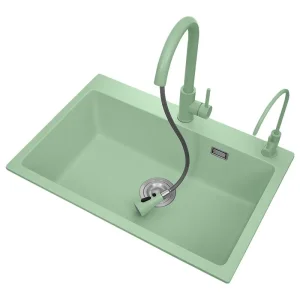
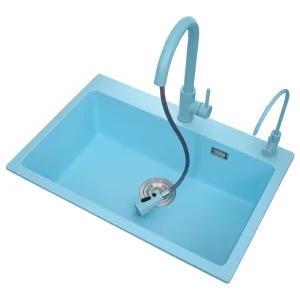
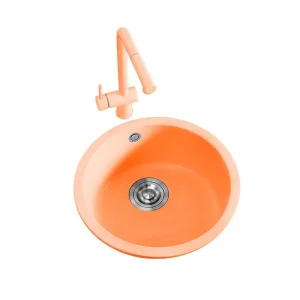
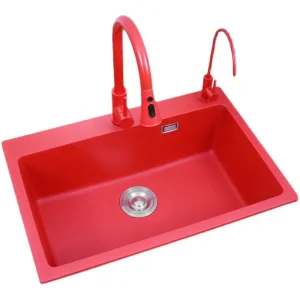
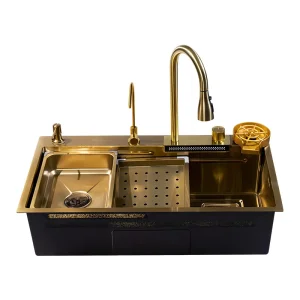
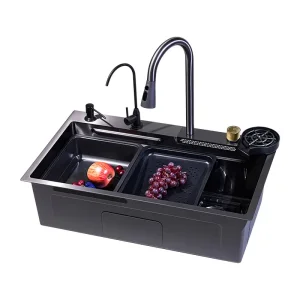
With the rise of customized color choices in premium residential projects, buyers are no longer content with standard polished metal finishes. Our product catalog highlights this design shift, featuring PVD-colored sinks, macaron-colored children's sinks, and deep, matte black textures that match customized fixtures. The in-sink dish rack must seamlessly blend with these finishes—whether it is coordinated with gold-brushed PVD, bold Chinese Red, or minimalist matte cream whites.
Strategic resources deployed for global high-volume OEM/ODM partnerships
Explore the cohesive product families engineered to interface seamlessly with our customized in-sink racks
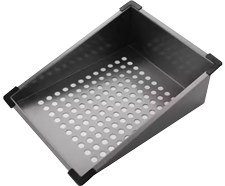
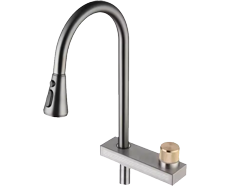
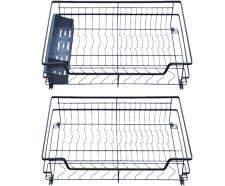
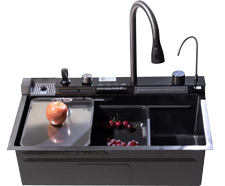
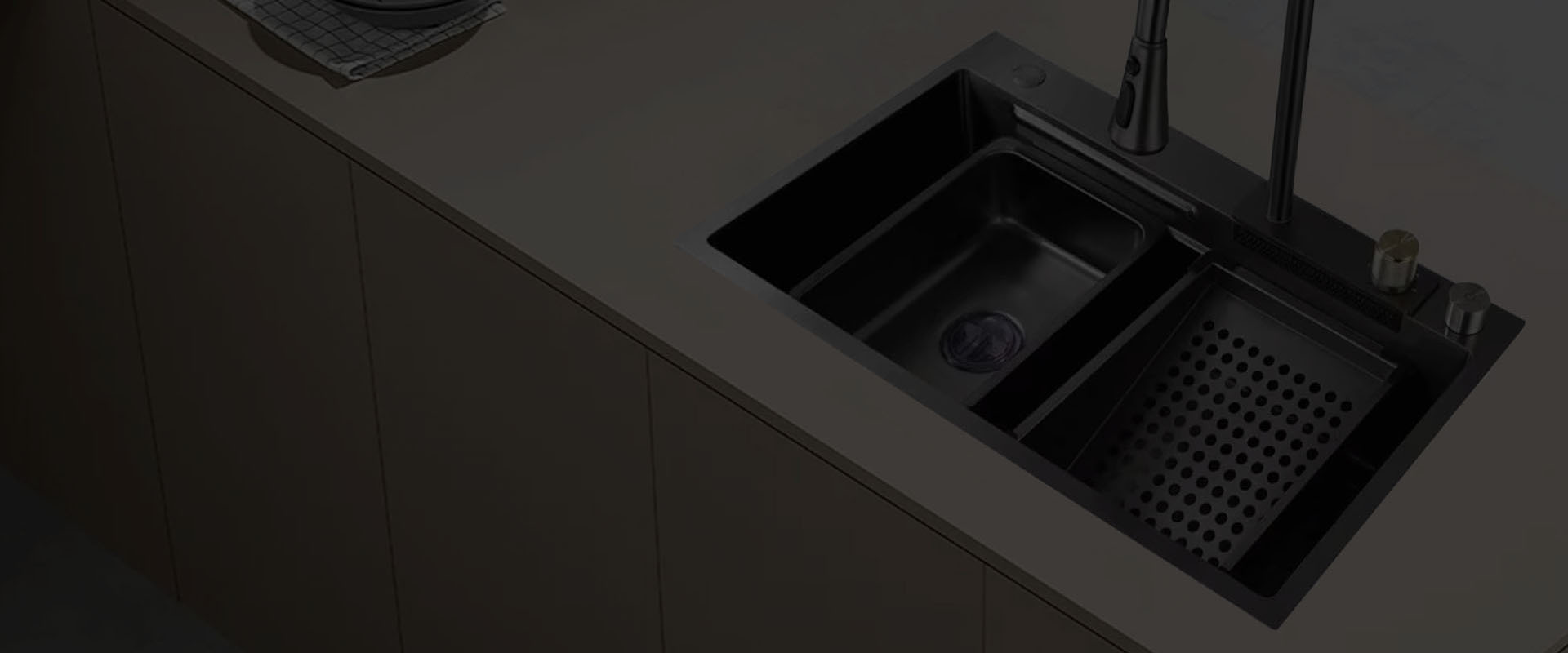
Daily life starts from the kitchen. Our premium integrated collections are manufactured to tolerances below 0.5mm, ensuring a rattle-free fit with all sliding dish racks and cutting boards. Each component utilizes food-grade materials and boasts high chemical resistance, making them ideal for high-use kitchens.
When engineering in-sink storage systems for global wholesale distribution, our product design department concentrates on three critical engineering criteria: load-bearing integrity, drainage dynamics, and surface energy optimization. A dish rack that bends under load or retains moisture is a failure of structural design.
To assure long-term durability in wet environments, our dish racks undergo rigorous testing. We maintain strict control over chemical compositions to guarantee corrosion resistance. Under ASTM B117 salt spray testing, our raw SUS304 frames achieve a rating of 10 without pitting, even after 48 hours of continuous exposure. This exceptional level of corrosion resistance is vital for preventing rust caused by acidic dish detergents, residual food particles, and hard water minerals.
Did you know? PVD (Physical Vapor Deposition) technology fuses titanium nitride with the steel substrate at a molecular level, raising the surface hardness of the rack to over 8H on the Mohs scale, effectively preventing scratches from heavy cast iron pots and steel utensils.
By employing advanced computer simulations during development, our designers analyze how stress distributes across the rack. This enables us to optimize the gauge of the wire frame (typically 4.0mm to 6.0mm for structural supports) and choose the best wire spacing. This calculated structural balance prevents bowing when the rack is loaded with heavy stone plates or cast-iron cookware, ensuring it remains secure and level.
Metal scraping against metal generates unpleasant high-frequency noise. Our premium dish racks address this issue with custom co-molded silicone edge-guides or food-grade polyurethane feet. These additions protect the sink's surface from scratches while acting as shock absorbers to damp vibrations when heavy pots are set down.
Why international brands, high-volume distributors, and homebuilders select Henan Yigen as their primary manufacturing partner
We customize sizes, line geometries, wire spacing, and accessory inserts to fit the specific profiles of your proprietary sink models, guaranteeing a precise, rattle-free fit.
Leveraging our 50,000+ sqm plant and strategic raw material procurement agreements, we offer stable pricing structures, bulk discounts, and rapid lead times to support large-scale construction and retail projects.
Every production run undergoes strict dimensional validation, salt spray exposure tests, and surface energy mapping. This ensures flawless delivery to retail channels and project assembly lines alike.
A structured, collaborative approach engineered to translate your ideas into market-ready products with minimum lead time

1. Provide ID Design

2. 3D Modeling

3. Custom Mold Tooling

4. Prototype Approval

5. Optimization

6. Performance Tests

7. Mass Production
Importing wet-area kitchen hardware requires navigating strict regulatory frameworks. Because dish racks are in contact with plates and cutlery, the materials used must meet food safety standards. These regulations dictate chemical testing and certification requirements to ensure safety before entering key global markets.
Any non-stick coatings, decorative rubber dampeners, or structural plastics used in our sink accessories undergo comprehensive laboratory testing. This ensures full compliance with United States FDA (Food and Drug Administration) requirements and European LFGB (Lebensmittel- und Futtermittelgesetzbuch) standards, preventing chemical migration and heavy metal contamination.
B2B shipping presents physical hazards. Our products are packaged using edge-protected, ISTA-certified configurations to withstand drops and high pressure, minimizing damage rates during transit. We provide transparent HS code categorization (typically 7324.10 for stainless steel kitchen articles) to simplify customs processing and reduce regulatory delays at international ports.
Our commitment to R&D shapes the future of our product line. Over the next five years, our engineers and designers are targeting three major structural developments:
We are shifting our focus to sourcing recycled steel alloys and adopting low-emission vacuum PVD technologies. This shift helps reduce our carbon footprint, which is a key priority for corporate builders and green purchasing groups worldwide.
Our technical team is currently prototyping sink-integrated dish racks that incorporate ultraviolet (UV-C) sterilization lights and built-in hot-air blowers. These features help accelerate drying times and inhibit bacterial growth in high-humidity climates.
To accommodate space-restricted urban housing, we are developing space-saving, fold-away racks and modular configurations that allow users to customize their drying layout on demand.
Industry-leading perspectives from our material sciences laboratory and global supply chain strategists
Explore how smart kitchens are driving the demand for custom-fitted, multifunctional accessories that sit directly over the sink basin to optimize compact spaces.
An in-depth analysis of how space constraints in urban apartments are transforming high-quality dish racks into essential, value-added selling features for developers.
A review of chemical composition standards, comparing the corrosion rates of SUS304 and SUS201 stainless steels under heavy chemical exposure in coastal environments.
Technical answers to help buyers evaluate performance metrics, sourcing processes, and customization capabilities
A: Grade SUS304 is the industry standard for durability in humid areas. For coastal regions or projects exposed to hard water, we recommend using SUS304 with an additional PVD nano-coating to protect against pitting corrosion.
A: Yes. Our design department can create custom racks using your 3D CAD files (.STEP or .IGS formats) to ensure precise sizing, proper drainage, and integrated silicone non-slip features.
A: Preparing custom tooling and delivering the first sample generally takes 20 to 30 days. Mass production can begin immediately once you approve the prototype.
A: We use FEA software to model stress distribution and perform physical testing with distributed weights up to 25 kg to ensure the rack retains its shape over long-term use.
A: Yes, all plastic spacers, silicone edge guards, and anti-slip feet are fully certified to meet FDA and LFGB food-contact safety standards.
A: We use precise automated welding systems to avoid weak spots, followed by an electrochemical passivation process that restores the protective chromium oxide layer on the steel surface.
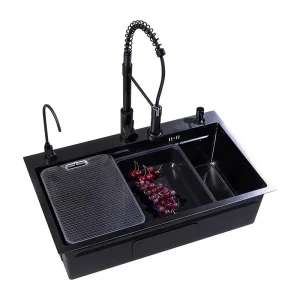
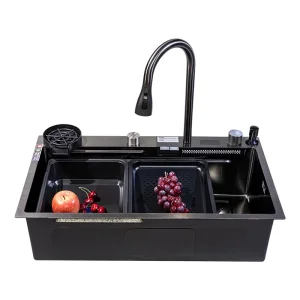
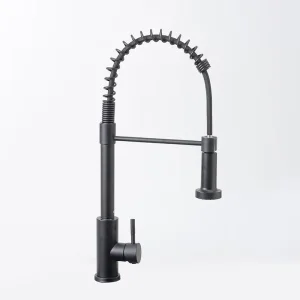
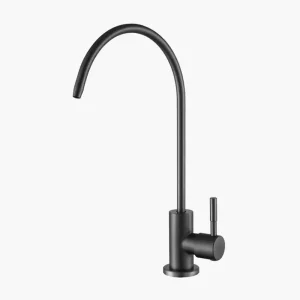
Discover matching stainless steel sinks, pull-out faucets, and color-matched PVD accessories

 YiGeng