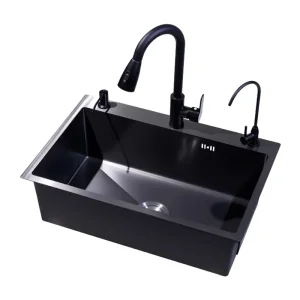
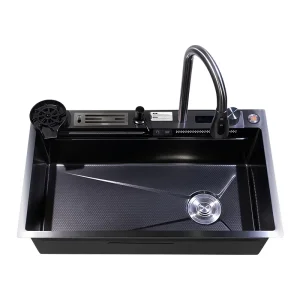
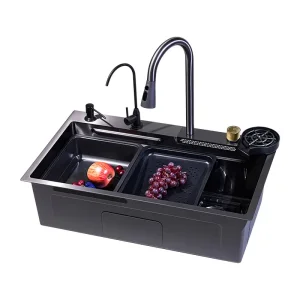
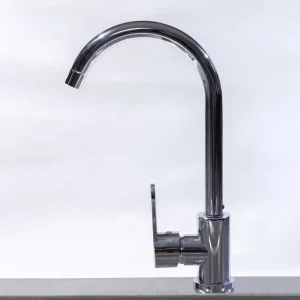
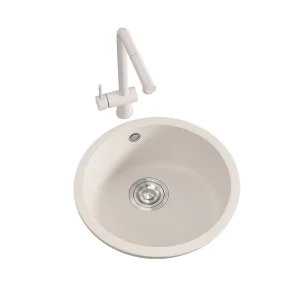
High-Quality Pull Down Kitchen Faucet Supplier & Factories

Precision Engineering, Sustainable Compliance, and Global OEM/ODM Manufacturing Excellence

Our Manufacturing Footprint

Scale, specialization, and design expertise integrated to power international retail and development pipelines.

50,000+
Square Meters Plant Area
700+
Skilled Production Personnel
25+
R&D Engineering Specialists
10+
Design Department Creatives

Enterprise Buyer’s Guide: Pull-Down Faucet Manufacturing

An in-depth look at material science, regulatory compliance, supply chain logistics, and design trends dictating modern kitchen architecture.

1. Executive Summary & Market Paradigm Shifts

The global kitchen plumbing market is undergoing a significant transition. No longer viewed simply as standard plumbing utilities, kitchen faucets are now critical architectural centerpieces that balance water efficiency, ergonomic optimization, and visual design. Within this paradigm, the Pull-Down Kitchen Faucet has emerged as the global standard for both premium residential spaces and commercial developments.

For international sourcing directors, property developers, and distributors, selecting a reliable manufacturer is not merely about identifying low unit costs. Instead, it requires evaluating a partner's capacity for technological innovation, lead-free material compliance, robust surface finishing processes, and long-term mechanical reliability.

2. China's Global Manufacturing Dominance & Supply Chain Advantages

China remains the world's premier production hub for sanitary ware, powered by highly integrated industrial clusters, advanced metallurgical engineering, and unparalleled logistics infrastructure. Factory hubs, such as those operated by Henan Yigen Kitchen & Bathroom Co., Ltd., provide distinct advantages that cannot be replicated in smaller markets:

  • Raw Material Ecosystems: Access to high-grade, certified Lead-Free Brass (HPb59-1) and food-grade SUS304 Stainless Steel ensures that material purity is maintained from raw ingot to cast body.
  • Tooling and Casting Specialization: Advanced low-pressure gravity casting and high-speed CNC machining centers ensure dimensional tolerances within micrometers, directly minimizing cartridge leakages and structural failures.
  • Integrated Electroplating and Finishing: Highly controlled PVD (Physical Vapor Deposition) facilities allow for advanced, wear-resistant surface treatments like Brushed Gold, Matte Black, and Spot-Free Stainless Steel.
  • Unmatched Scale: Operating out of a massive 50,000-square-meter facility with over 700 production staff allows for the parallel execution of high-volume OEM contracts and highly customized ODM batches.

3. Global Regulatory Compliance & Certification Engineering

B2B buyers operating in North America, Western Europe, and Oceania face strict regulatory environments regarding drinking water safety and conservation. Placing uncertified products on the market risks severe legal liabilities and product recalls. A reliable manufacturer must design and test products according to these global requirements:

North America

Requires cUPC (ASME A112.18.1/CSA B125.1), NSF/ANSI 61 (for health effects), NSF/ANSI 372 (Lead-Free compliance), and EPA WaterSense flow limiters.

United Kingdom

Requires WRAS (Water Regulations Advisory Scheme) approvals for non-metallic components to ensure zero chemical leaching into potable water.

European Union

Demands CE marking, compliance with EN 817, and regional sanitary approvals such as ACS (France), KTW/W270 (Germany), and KIWA.

Australia & NZ

Enforces WaterMark Level 1 certification alongside WELS (Water Efficiency Labeling and Standards) registration for water usage audits.

Our R&D department (comprising 25+ technical R&D personnel) actively collaborates with testing laboratories (SGS, IAPMO, TUV) to certify that internal waterways, flexible pull-down hoses (PEX, EPDM), and cartridge assemblies meet or exceed global standards.

4. Key Technical Innovations in Modern Pull-Down Faucets

To gain a competitive market share and provide high information gain for retail consumers, business buyers must offer distinct technological upgrades. We specialize in engineering the following advancements:

  • Magnetic Docking Systems: Utilizing heavy-duty Neodymium magnets to securely dock the spray head, preventing the common issue of sagging spray heads over extended use.
  • Multi-functional Spray Patterns: Integrating dual-spray, stream, and pressurized rinse functions (using premium Neoperl aerators) to optimize water-use efficiency while maintaining high pressure.
  • Ultra-Durable Ceramic Cartridges: Sourcing European-engineered or premium domestic ceramic disc cartridges tested to survive more than 500,000 open-close cycles.
  • Durable Pull-Out Hoses: Outfitting our faucets with braided nylon or quiet-glide silicone hoses that offer high flexibility, resistance to heat up to 90°C, and minimal noise during extraction.

5. Localized Application Scenarios

The pull-down faucet is versatile, but its physical design and technical parameters must be tailored to specific regional application scenarios:

High-End Residential Upgrades

Focus on elegant, high-arc spouts with premium finishes like Matte Black and Champagne Bronze. Single-hole installations with integrated smart-touch or motion-activated sensors fit clean, minimal, open-concept spaces.

Multi-Family Housing & Apartments

Requires cost-effective durability. Standardizing on Lead-free SUS304 construction with Spot-Resistant Brushed Nickel. Optimized for standard deck plates to cover existing 3-hole configurations during renovations.

Commercial Kitchens & Cafes

Requires heavy-duty, high-flow rate spring-neck designs with solid brass bodies. Dual-handle or foot-pedal activation options, along with wall-mounted configurations, cater to high-frequency, commercial use.

Industrial Customization Lifecycle

A structured, quality-controlled development workflow engineered to bring custom designs to life safely and efficiently.

01
ID Design

Provide ID Design

02
3D Modeling

3D Modeling

03
Open Tooling

Open Real Mold

04
Confirm Sample

Customer Confirm

05
Modify Sample

Modify Sample

06
Sample Testing

Sample Testing

07
Mass Production

Mass Production

6. Strategic Sourcing Decisions: Brass vs. Stainless Steel

One of the most critical decisions for a purchasing manager is selecting the underlying metal substrate. Understanding the physical differences between brass and stainless steel is essential for accurate product positioning:

  • Lead-Free Brass (HPb59-1 or DZR Brass): Highly malleable, enabling intricate organic shapes and curved design profiles. Naturally anti-microbial. Requires specialized low-pressure gravity casting and chemical pickling to remove any trace lead. Preferred for high-end residential designs and markets with strict anti-zincification requirements.
  • SUS304 Stainless Steel: Extremely durable, hard, and naturally lead-free without chemical treatments. Offers excellent resistance to acid corrosion and mechanical wear. Typically machined or laser-welded rather than gravity-cast. Ideal for modern minimalist projects, offering a rugged, durable aesthetic.

7. Future Trends: The Integration of IoT and Ecological Standards

The kitchen fixture industry is rapidly evolving, driven by smart home adoption and strict eco-friendly regulations:

  • Capacitive & Motion Sensors: Touchless activation prevents the spread of kitchen pathogens and saves water by turning off when hands are removed. Solenoid valves are engineered for low-power standby cycles to extend battery life.
  • Ultra-Low Lead Alloys: Next-generation plumbing codes will likely lower lead limits below the current 0.25% weighted average, pushing manufacturers to refine their smelting and washing processes.
  • Physical Vapor Deposition (PVD): A vacuum coating method that deposits thin metallic films on the faucet surface. PVD provides superior scratch resistance, making finishes like Brushed Gold and Antique Bronze much more durable.

Frequently Asked Questions (FAQ)

Expert insights addressing key sourcing concerns, testing protocols, and trade procedures.

What quality-control tests does Henan Yigen conduct for OEM orders?
Every batch undergoes rigorous quality testing, including 100% air-pressure tests (at 0.8 MPa) and water leakage tests before packaging. We also conduct life-cycle testing on cartridges (up to 500,000 operations), salt spray tests (NSS/ASS for 24-48 hours) to verify plating quality, and hose tension tests up to 50kg.
How do you guarantee lead-free compliance for strict markets like North America and Australia?
We source verified brass alloys that meet NSF/ANSI 372 standards (less than 0.25% weighted lead content). For SUS304 products, we use pure virgin steel coils that are naturally lead-free. Material certificates are provided with every shipment, and our production line is periodically audited by IAPMO.
What is the standard lead time for customized ODM tooling and sampling?
The ODM customization process begins with 3D modeling (3-5 days). Once the design is approved, creating a real mold and casting initial samples takes 25-30 days. Final sample testing and feedback loop typically add 7-10 days, followed by mass production which usually takes 30-45 days depending on the order size.
Can you accommodate custom PVD surface finishes for boutique brands?
Yes, our in-house PVD facility can match specific color profiles, including Brushed Gold, Rose Gold, Gunmetal Grey, Matte Black, and Spot-Free Stainless Steel. We also provide customized laser engraving for brand logos on the faucet body and handles.