Engineered to meet South Korea's strict energy-saving regulations and aesthetic benchmarks.
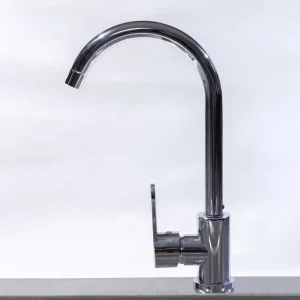
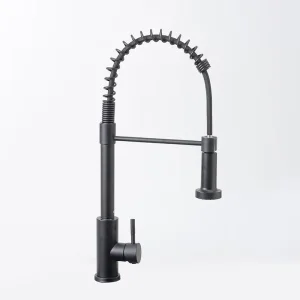
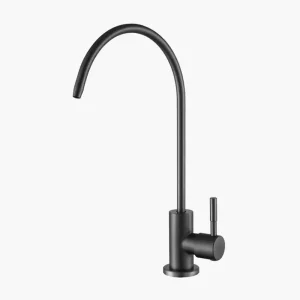
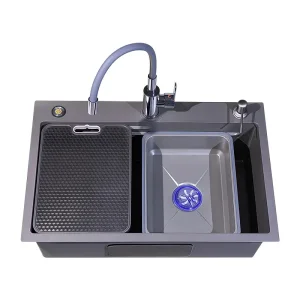
An in-depth analysis of regulatory constraints, raw material benchmarks, and China-to-Korea supply chains.
In high-density metropolises like Seoul, municipal infrastructure requires plumbing fixtures that balance water efficiency, mechanical durability, and strict public health safety. As the Seoul Metropolitan Government accelerates the deployment of Smart Green Buildings under local carbon neutrality initiatives, selecting key components like commercial-grade faucets is no longer just an aesthetic decision. It has evolved into a complex engineering requirement governed by local certifications, durability thresholds, and strict lead-free raw material metrics.
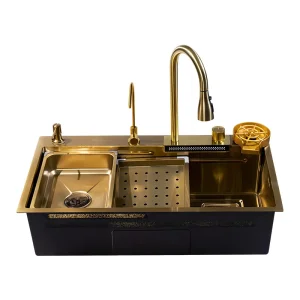
Seoul's key commercial submarkets—the Central Business District (CBD) in Jongno/Jung-gu, the Gangnam Business District (GBD), and the Yeouido Business District (YBD)—are experiencing rapid retrofitting cycles. High-rise developments and corporate headquarters demand touchless infrared sensor faucets and high-efficiency sanitary fixtures to lower operational costs and achieve LEED or G-SEED (Green Standard for Energy and Environmental Design) certifications. In premium residential developments across Mapo, Yongsan, and Gangnam, there is a distinct preference for SUS304 kitchen systems, customizable PVD-coated elements, and pull-out telescopic mixers that adapt to modular compact layouts.
According to construction metrics in South Korea, water conservation regulations under the Water Supply Act require newly constructed buildings to install water-saving devices. Specifically, basin faucets must maintain a flow rate under 6.0 liters per minute (L/min) at static pressures of 98 kPa, and kitchen mixers must operate below 7.5 L/min. Achieving these performance levels without compromising user experience requires precision-engineered aerators and pressure-compensating flow regulators.
Any manufacturer supplying sanitary fittings to the South Korean market must navigate a robust framework of local standards designed to guarantee public health and system reliability:
To ensure high durability under continuous municipal pressure fluctuations, modern commercial tapware relies on advanced materials and precise cartridge designs:
Partnering with a vertically integrated Chinese OEM/ODM supplier like Henan Yigen Kitchen & Bathroom Co., Ltd. offers significant cost and scale benefits for major commercial developments in Seoul. The sanitary hardware manufacturing clusters in Shuikou (Kaiping, Guangdong) and Wenzhou (Zhejiang) provide deep raw material networks, specialized tooling workshops, and advanced manufacturing technologies. This scale translates directly into clear competitive advantages:
To ensure high quality across every shipment destined for South Korea, our factory runs a comprehensive quality control program before packing:
From custom conceptual designs to final container shipments, we support your project at every stage.


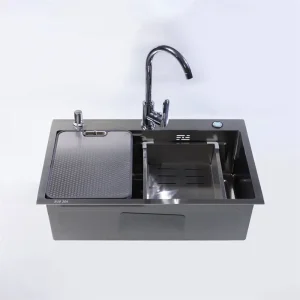
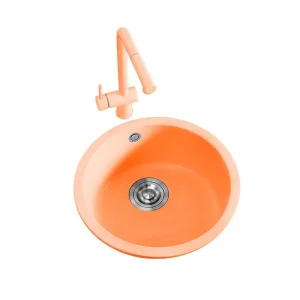
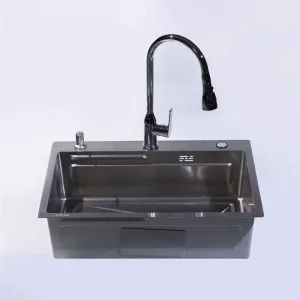
Durable, corrosion-resistant, and aesthetically designed to match modern commercial and residential spaces in Seoul.
Get answers to key questions about sourcing, regulatory compliance, and custom hardware engineering.
 YiGeng