 YiGeng
Whitepaper: Engineered Stainless Steel Sink Solutions for the Russian Federation
This industrial whitepaper presents an in-depth analysis of the design parameters, manufacturing standards, logistics optimization pathways, and supply chain strategies essential for procurement executives sourcing commercial and residential stainless steel sinks for the Russian market.
1. The Russian Plumbing & Sanitary Ware Market Landscape
The demand for high-durability plumbing fixtures in Russia has experienced a structural realignment. Urban redevelopment programs across first-tier administrative centers like Moscow and St. Petersburg, coupled with expansive residential construction in regional hubs such as Novosibirsk, Ekaterinburg, and Vladivostok, have heightened the standards for kitchen and bathroom installations. The Russian market requires plumbing fixtures that can withstand severe thermal expansion differentials. This is particularly vital in communal heating networks where municipal water temperatures fluctuate dramatically between seasons, posing structural risks to low-grade metallic configurations.
Moreover, local building codes demand compatibility with GOST standards (Gosudarstvenny Standart), necessitating high-thickness steel, robust anti-condensation coating, and resilient plumbing hookups. As premium European manufacturers exit or scale back, the procurement mandate has shifted towards integrated Chinese factories capable of offering matching or superior technical specifications. B2B buyers now look for robust OEM partners who can deliver heavy-gauge AISI 304 and AISI 316 grade configurations that resist local water conditions—which often contain elevated levels of mineral deposits and iron oxides.
2. Global Supply Chain Dynamics & Geopolitics of Kitchen Hardware
Stainless steel production margins are heavily linked to global nickel, chromium, and molybdenum commodity pricing. Industrial buyers must monitor raw material indexes to optimize their procurement cycles. Recent trade re-routing has optimized the China-Russia supply chain, utilizing the China-Europe Railway Express (New Silk Road) via Manzhouli or Erenhot, as well as multimodal maritime lanes through the Port of Vladivostok and the Port of Novorossiysk. These established logistics channels bypass traditional Northern European ports, slashing shipping times to western Russian markets by over 50% compared to historical routes.
“Strategic sourcing is no longer just about the unit cost—it is about routing resilience, raw material traceability, and duty-optimized tariff structures under bilateral trade protocols.”
Working directly with integrated Chinese manufacturers allows B2B importers to lock in raw material volumes ahead of market spikes. By securing production lines with large-scale factories, distributors can hedge against inflation and ensure a steady inventory flow. This is critical for major Russian development projects where delays in sanitary fixture deliveries can lead to substantial financial penalties.
3. Chinese Manufacturing Supremacy & High-Efficiency Production
The technical advantage of Chinese kitchen appliance factories stems from deep supply chain integration and advanced manufacturing technologies. Facilities like Henan Yigen Kitchen & Bathroom Co., Ltd. operate over 50,000 square meters of production space, using heavy-tonnage hydraulic deep-drawing presses and automated laser welding robots. The precision of automatic laser welding ensures structural integrity, eliminating micro-voids along the corners of handmade R0 or R10 radius sinks—a common point of failure where stress corrosion cracking can develop in cheaper stamped alternatives.
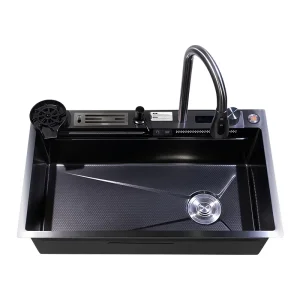
Additionally, modern Chinese factories lead in eco-friendly surface treatment technologies. This includes Physical Vapor Deposition (PVD) vacuum chamber coating, which infuses titanium nitride onto the stainless steel surface. The resulting protective layer provides outstanding scratch resistance and chemical immunity against harsh household cleansers. In addition, the application of non-toxic, heavy-duty undercoatings and dense rubber sound-dampening pads ensures that water-drop noise is minimized, keeping decibel ratings well within acceptable limits for modern residences.
4. Localized Application Scenarios Across the Russian Federation
- Siberian Residential Infrastructure (Severe Cold Adaptation): Residential plumbing systems in places like Krasnoyarsk or Irkutsk require specialized anti-condensation treatment. Heavy-duty undercoating prevents condensation from forming on the sink's underside when exposed to freezing room temperatures and hot running water. This prevents moisture buildup, protecting kitchen cabinetry from dry rot and mold.
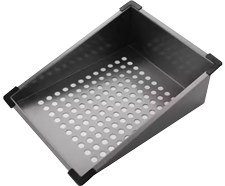
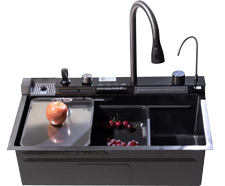
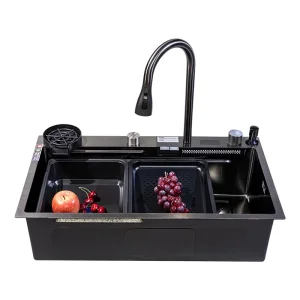
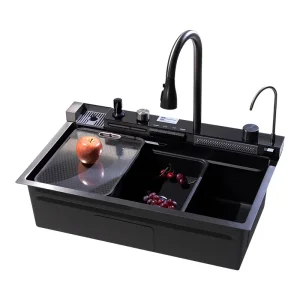
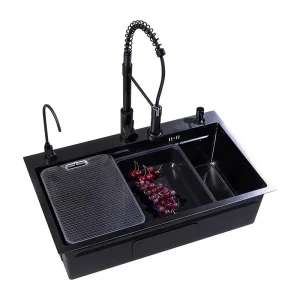
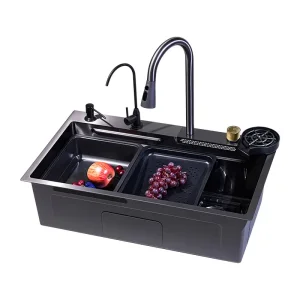
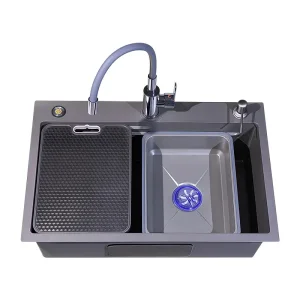
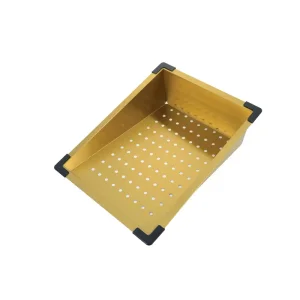
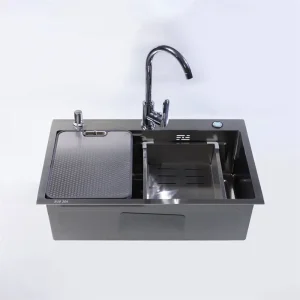
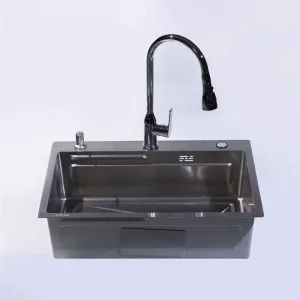
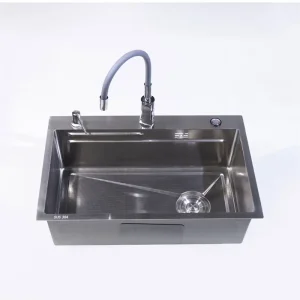
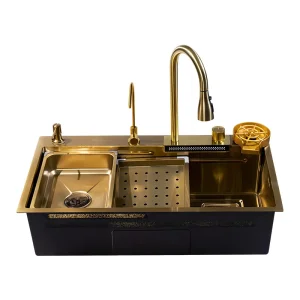
- Metropolitan Micro-Apartments (Space Optimization): Multi-family residential high-rises in Moscow utilize compact workstation sinks with integrated sliding cutting boards, drain baskets, and colanders. This design maximizes usable counter space without sacrificing utility.
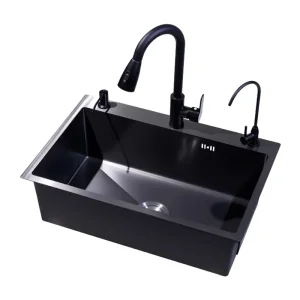
- High-Traffic Commercial Catering (HoReCa Sector): Restaurants, hotels, and tourist facilities in Sochi or Kazan require heavy-gauge (1.2mm to 1.5mm / 16 to 18 Gauge) AISI 304 grade single and double-bowl setups. These sinks must be highly resistant to acidic food wastes and mechanical impact.
- Public Sector Sourcing (Hospitals and Schools): Demands strict non-porous surfaces with seamless coved corners to prevent bacterial harborages, complying with Russian sanitary-epidemiological regulations (SanPiN).
5. Technological Trends Transforming Modern Sink Engineering
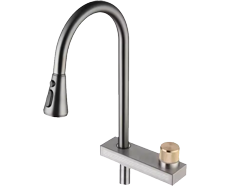
The sanitary industry is transitioning towards smart kitchen solutions. Key innovations include integrated waterfall faucets, touchless infrared control valves, and digital water temperature readouts powered by internal water-flow micro-turbines, eliminating the need for external electrical connections. Surface treatments have also advanced; nanostructured ceramic coatings are applied to PVD surfaces to create a hydrophobic self-cleaning effect. Oil and water bead up and roll off, reducing clean-up times and chemical usage in both domestic and commercial environments.
6. Procurement Playbook for B2B Buyers & Distributors
When importing industrial or commercial sinks into the Russian Federation, B2B buyers must prioritize quality control verification and import compliance. Every batch should undergo salt-spray testing (ASTM B117) to verify corrosion resistance, along with spectroscopic alloy tests to confirm nickel content meets the minimum 8% threshold for 304 stainless steel. Working with experienced manufacturers simplifies customs clearances. It ensures all documentation, including declaration of conformity (DoC) and EAC (Eurasian Conformity) certification paperwork, is prepared correctly to avoid costly delays at border customs checkpoints.